

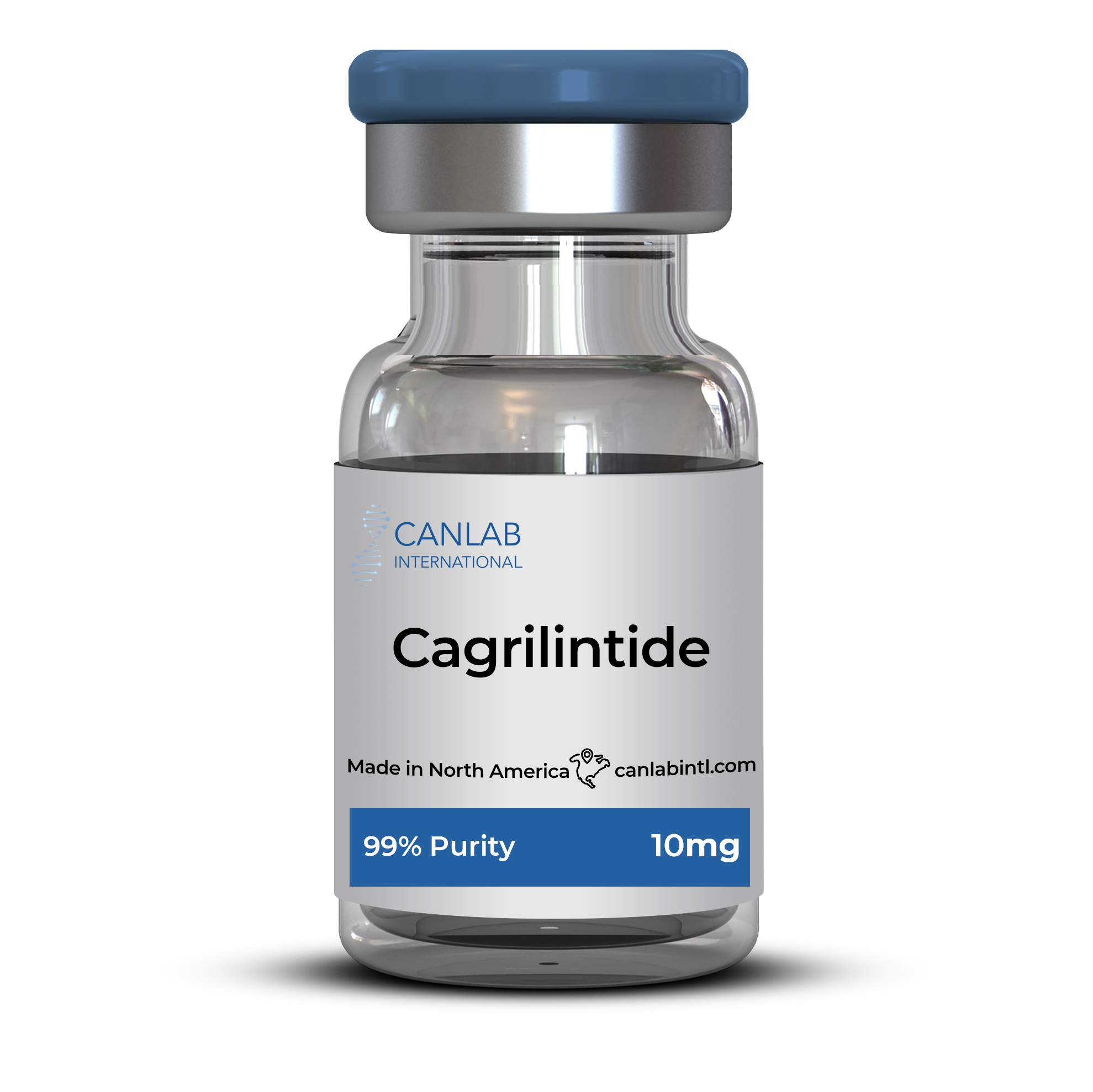
Cagrilintide (10mg)
$187.00
- Sequence
- Ser-Leu-Arg-Arg-Ser-Ser-Cys-Phe-Gly-Gly-Arg-Met-Asp-Arg-Ile-Gly-Ala-Gln-Ser-Gly-Leu-Gly-Cys-Asn-Ser-Phe-Arg-Tyr
- Molecular Formula
- C₂₁₃H₃₁₂N₄₆O₆₆S₂
- Molecular Weight
- 4573.3 g/mol
- PubChem CID
- 137347421
- Lyophilized peptides should be reconstituted using proper aseptic laboratory technique.
- Reconstitution must be performed using Canlab-supplied Bacteriostatic Water and handled in accordance with generally accepted research practices.
- Warranty related to reconstitution, sterility or material integrity applies only when Canlab Bacteriostatic Water is used.
- Use of third-party diluents or deviation from the provided handling guidance voids any applicable warranty.
For full handling instructions and limitations, see the Peptide Reconstitution section in our Product Warranty Policy Page →
Description
Structural Classification
Cagrilintide is a long-acting, acylated amylin analog designed to mimic and enhance the activity of human islet amyloid polypeptide (IAPP).
- Peptide length: 37 amino acids (amylin backbone)
- Class: Amylin receptor agonist
- Modifications:
- Amino acid substitutions (reduce aggregation)
- Lipidation (fatty acid conjugation) for albumin binding
- C-terminal amidation
These modifications transform a naturally unstable hormone into a long-acting therapeutic peptide analog.
Mechanism of Action
Cagrilintide acts primarily through amylin receptor complexes, which are formed by:
- Calcitonin receptor (CTR)
- Receptor activity-modifying proteins (RAMPs)
Downstream Effects:
- Activation of central satiety pathways (area postrema, hypothalamus)
- Slowing of gastric emptying
- Reduction in postprandial glucagon secretion
- Modulation of energy intake signaling
Central Nervous System Effects
Cagrilintide strongly influences appetite regulation:
- Acts on area postrema (brainstem) → reduces hunger signaling
- Enhances meal termination signals
- Reduces food reward behavior
This differs from GLP-1 analogs slightly by:
- Having a more direct satiety signal
- Less reliance on insulin-mediated pathways
Pharmacokinetics (Research Data)
Key design goal: extend half-life vs native amylin
- Native amylin half-life: ~10–15 minutes
- Cagrilintide half-life: ~1 week (due to lipidation + albumin binding)
Mechanism of Extension:
- Fatty acid side chain → reversible albumin binding reservoir
- Reduced renal clearance
- Protection from enzymatic degradation
Additional Information
Benefits
Please review the complete product description and available supporting documentation for product-specific research information.
Mechanism of Action
Refer to the product description, certificate of analysis and applicable published research for product-specific information. No medical or therapeutic claims are made.