

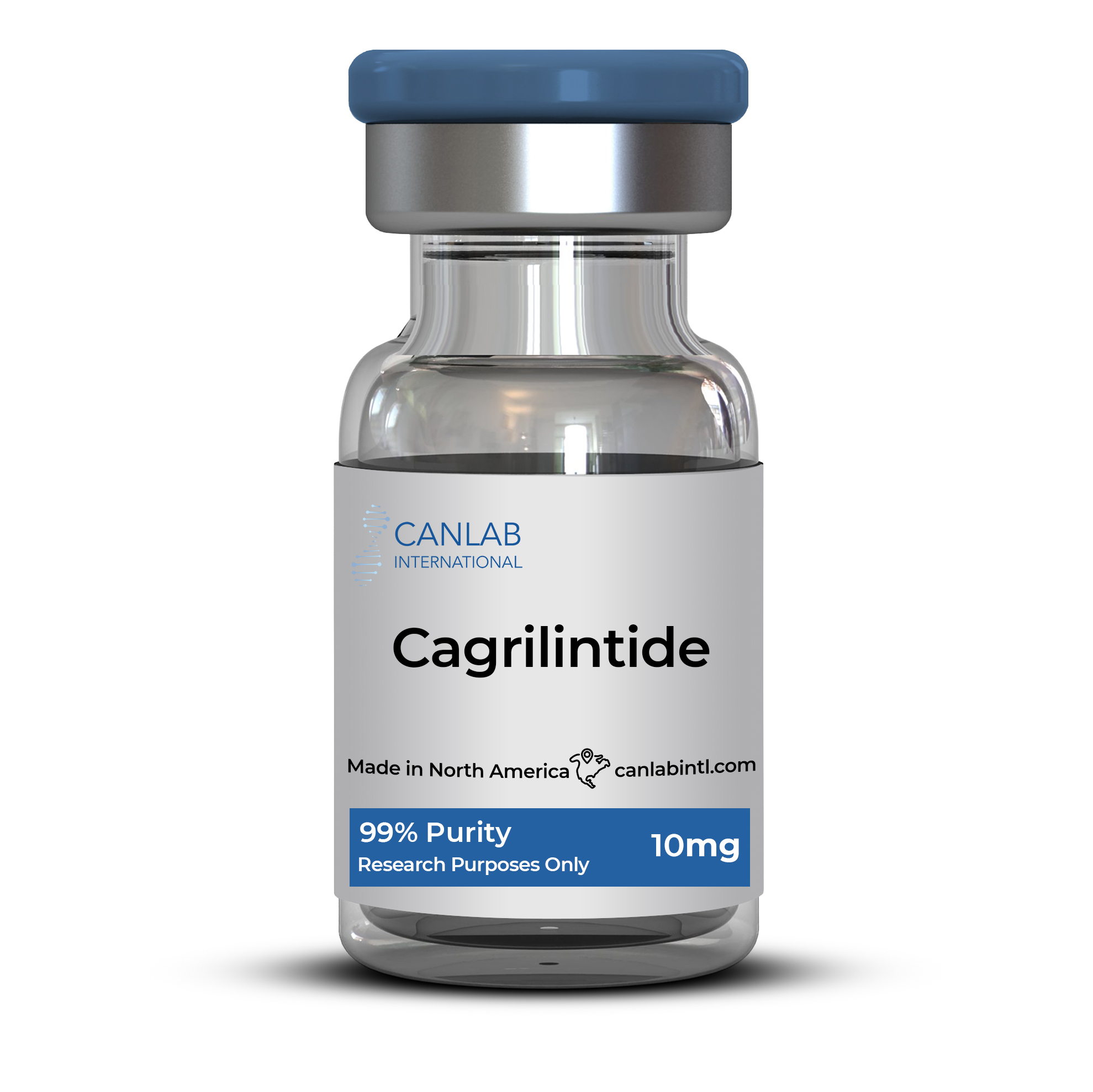
Cagrilintide (10mg)
$187.00
- Sequence
- Ser-Leu-Arg-Arg-Ser-Ser-Cys-Phe-Gly-Gly-Arg-Met-Asp-Arg-Ile-Gly-Ala-Gln-Ser-Gly-Leu-Gly-Cys-Asn-Ser-Phe-Arg-Tyr
- Molecular Formula
- C₂₁₃H₃₁₂N₄₆O₆₆S₂
- Molecular Weight
- 4573.3 g/mol
- PubChem CID
- 137347421
For laboratory research use only. Not for human use.
- Lyophilized peptides should be reconstituted using proper aseptic laboratory technique.
- Reconstitution must be performed using Canlab-supplied Bacteriostatic Water and handled in accordance with generally accepted research practices.
- Warranty related to reconstitution, sterility or material integrity applies only when Canlab Bacteriostatic Water is used.
- Use of third-party diluents or deviation from the provided handling guidance voids any applicable warranty.
For full handling instructions and limitations, see the Peptide Reconstitution, Research Use Only section in our Product Warranty Policy Page →
Description
Structural Classification
Cagrilintide is a long-acting, acylated amylin analog designed to mimic and enhance the activity of human islet amyloid polypeptide (IAPP).
- Peptide length: 37 amino acids (amylin backbone)
- Class: Amylin receptor agonist
- Modifications:
- Amino acid substitutions (reduce aggregation)
- Lipidation (fatty acid conjugation) for albumin binding
- C-terminal amidation
These modifications transform a naturally unstable hormone into a long-acting therapeutic peptide analog.
Mechanism of Action
Cagrilintide acts primarily through amylin receptor complexes, which are formed by:
- Calcitonin receptor (CTR)
- Receptor activity-modifying proteins (RAMPs)
Downstream Effects:
- Activation of central satiety pathways (area postrema, hypothalamus)
- Slowing of gastric emptying
- Reduction in postprandial glucagon secretion
- Modulation of energy intake signaling
Central Nervous System Effects
Cagrilintide strongly influences appetite regulation:
- Acts on area postrema (brainstem) → reduces hunger signaling
- Enhances meal termination signals
- Reduces food reward behavior
This differs from GLP-1 analogs slightly by:
- Having a more direct satiety signal
- Less reliance on insulin-mediated pathways
Pharmacokinetics (Research Data)
Key design goal: extend half-life vs native amylin
- Native amylin half-life: ~10–15 minutes
- Cagrilintide half-life: ~1 week (due to lipidation + albumin binding)
Mechanism of Extension:
- Fatty acid side chain → reversible albumin binding reservoir
- Reduced renal clearance
- Protection from enzymatic degradation
Additional Information
Benefits
Please review the complete product description and available supporting documentation for product-specific research information. This product is sold strictly for laboratory research use.
Mechanism of Action
Refer to the product description, certificate of analysis and applicable published research for product-specific information. No medical or therapeutic claims are made.