

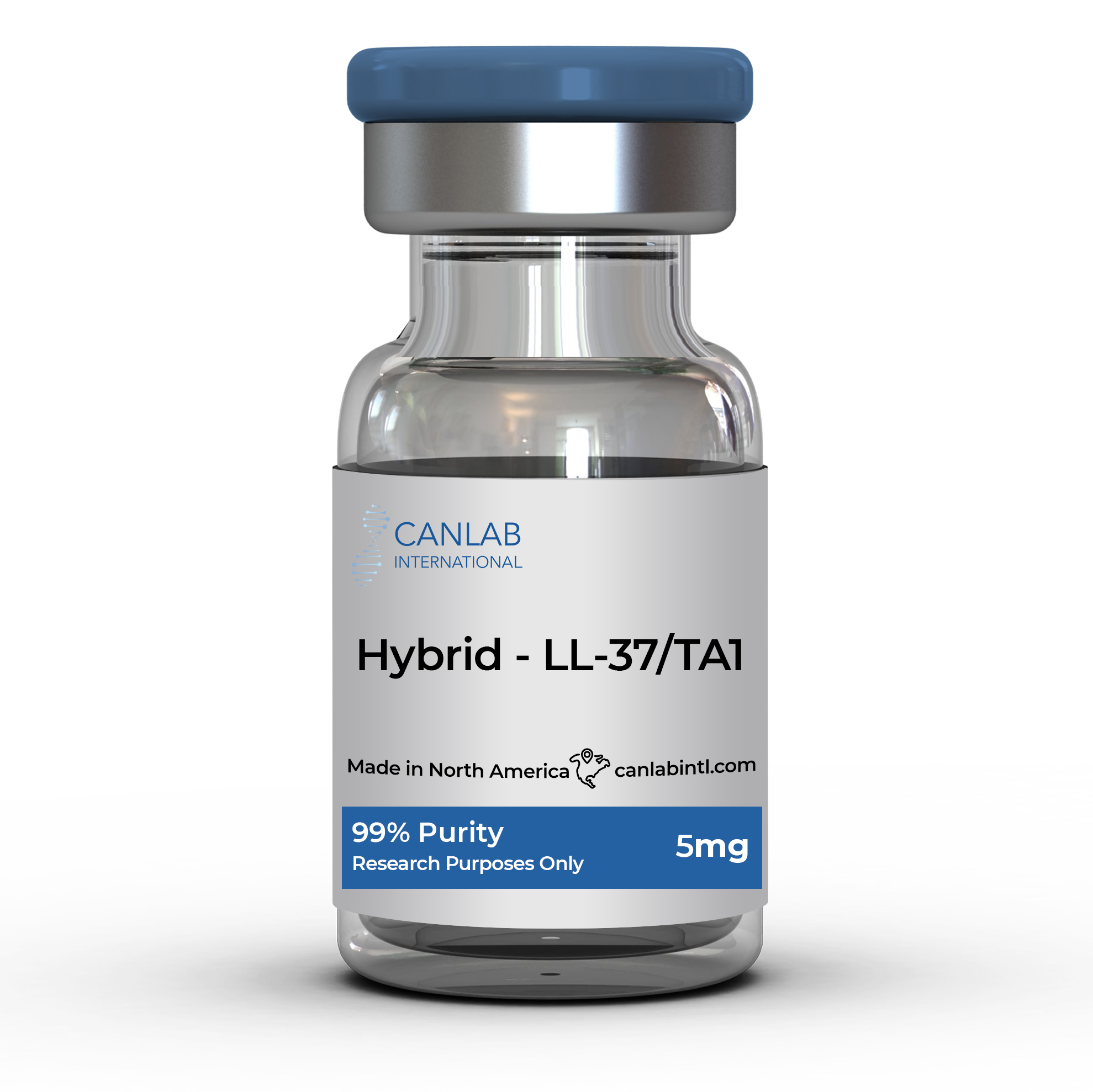
Hybrid LL-37/Tα1 (5mg) – Blend
$77.00
Out of stock
For laboratory research use only. Not for human use.
- Lyophilized peptides should be reconstituted using proper aseptic laboratory technique.
- Reconstitution must be performed using Canlab-supplied Bacteriostatic Water and handled in accordance with generally accepted research practices.
- Warranty related to reconstitution, sterility or material integrity applies only when Canlab Bacteriostatic Water is used.
- Use of third-party diluents or deviation from the provided handling guidance voids any applicable warranty.
For full handling instructions and limitations, see the Peptide Reconstitution, Research Use Only section in our Product Warranty Policy Page →
Description
Antimicrobial peptides (AMPs) are integral components of the innate immune system’s response against various microbes. Found in organisms like plants, animals, and various microorganisms, these peptides stand out due to their small size, amphipathic nature, and potent activity against bacterial, viral, and fungal infections. The focus on AMPs that target and neutralize lipopolysaccharides (LPS) has emerged due to bacterial resistance against traditional antibiotics, which has become a critical therapeutic concern. Though antibiotics have been used for treating inflammation, their usage often leads to side effects, such as the release of bacterial LPS, activating the immune system and causing complications like lethal shock. LPS, integral to the outer membrane of Gram-negative bacteria, contributes to various pathophysiological conditions. Hence, there’s a pressing need for new anti-inflammatory peptides possessing antibacterial and LPS neutralizing properties.
One such peptide is LL-37, an alpha-helical peptide discovered in human leukocytes in 1995, known for its pivotal role in defending against microbial infections while minimizing inflammation. Beyond its antimicrobial actions, LL-37 strengthens immunity, interacts with host cell surfaces, and directly binds to LPS, mitigating its effects on interleukin-6 (IL-6), interleukin 1β (IL-1β), and tumor necrosis factor-α (TNF-α). Consequently, LL-37 emerges as a promising peptide to control inflammation and counteract endotoxins.
Thymosin α1 (Tα1), a peptide derived from the natural thymic peptide, plays a crucial role in regulating immune responses against infectious diseases, such as hepatitis B and C, cancer, and sepsis. This peptide has demonstrated immunomodulatory functions, enhancing surface protein expression on tumor cells and mediating antigen production, such as major histocompatibility class (MHC) I, II, beta-2 microglobulin, and tumor-specific antigens.
A promising strategy involves combining different AMPs to create hybrid peptides with heightened antibacterial, anti-inflammatory, and less cytotoxic properties. Previous studies from our laboratory have designed and expressed two hybrid peptides, cecropin A (1-8)-LL37 (17-30) and melittin (1-13)-LL37 (17-30), in the Escherichia coli system. However, E. coli expression systems may have limitations in folding fusion proteins and lack proper post-translational modifications.
The present study aimed to synthesize and express a hybrid peptide, LL-37Tα1, by combining LL-37 (24 amino acids) and Tα1 (8 amino acids), hypothesizing that this combination might enhance LPS neutralization, immunomodulatory and anti-inflammatory activity while minimizing cytotoxic effects. The peptide was expressed using the methylotrophic yeast expression system to explore its bioactivities.
Additional Information
Benefits
Please review the complete product description and available supporting documentation for product-specific research information. This product is sold strictly for laboratory research use.
Mechanism of Action
Refer to the product description, certificate of analysis and applicable published research for product-specific information. No medical or therapeutic claims are made.
Frequently Bought Together
-

Sema (5mg) + Cagri (5mg) – Blend
$132.00 Add to Cart -
GLOW – BPC-157 (10mg) + TB-500 (10mg) + GHK-Cu (50mg) – Blend
$300.00 Add to Cart -
CJC 1295 (mod GRF 1-29) (3mg) + Ipamorelin (4.5mg) – Blend
$82.50 Add to Cart -
KLOW – BPC-157 (10mg) + TB-500 (10mg) + GHK-Cu (50mg) + KPV (10mg) – Blend
$350.00 Add to Cart